Too Big to Bury: What Happens When a Remix Blows Up Bigger Than the Song It Borrowed From
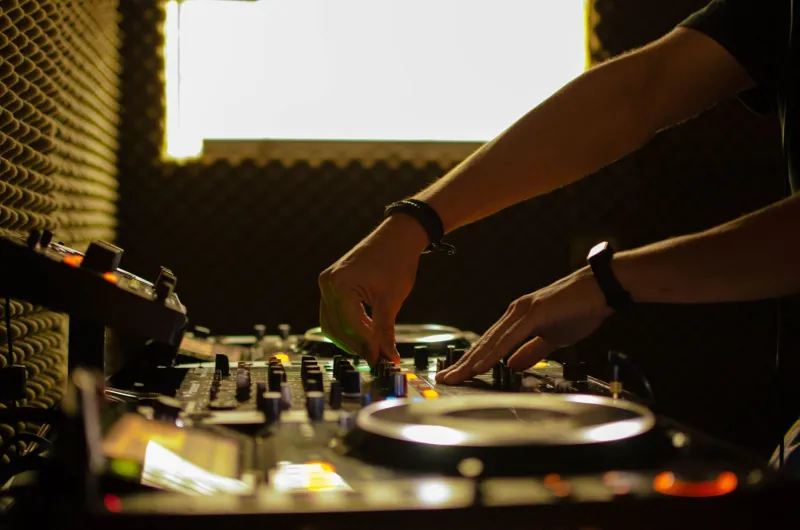
There's a moment every producer secretly fantasizes about: the upload that takes off overnight, the flip that cracks a playlist, the mashup that makes people forget the original even existed. But what happens when that fantasy goes so sideways — so massively, legally, culturally sideways — that it stops being a producer win and starts being a copyright case study?
That's the paradox nobody talks about when they're stacking stems at 2 a.m. Some of the most-streamed, most-shared, most-talked-about remixes in recent memory got there precisely because they lived in the gray zone. They weren't clean. They weren't cleared. And they absolutely were not supposed to blow up like that.
The Accidental Viral Machine
Let's set the scene. A bedroom producer in the Midwest mashes two records together — maybe a hip-hop vocal over a house instrumental from a different decade entirely. It sounds ridiculous on paper. It sounds perfect in the mix. They throw it on SoundCloud as a free download with a half-hearted disclaimer and forget about it for a week.
Then the numbers start climbing.
This is the origin story for more than a few landmark mashups. Danger Mouse's The Grey Album — Jay-Z's Black Album acappellas laid over Beatles samples — is still the textbook example. EMI sent cease-and-desist letters. The internet responded with a coordinated "Grey Tuesday" where thousands of sites hosted the album simultaneously as an act of civil disobedience. The controversy didn't kill the project. It turned it into a cultural monument.
The lesson there wasn't lost on producers who came after. Sometimes the legal friction is the fuel.
When the Original Artist Can't Win Either Way
Here's where it gets genuinely complicated. When a remix or mashup outpaces its source material, the original rights holders face a choice that's almost impossible to win cleanly. Go after the producer and you look like you're suppressing something that fans clearly love — and you hand the story to every music blog with a hot take ready. Let it ride and you've arguably set a precedent that unlicensed use is acceptable, at least when the numbers are big enough.
Daft Punk's "Harder, Better, Faster, Stronger" has been chopped, flipped, and rebuilt so many times that the bootleg ecosystem around that record has generated more streams than some artists see in a career. Most of those edits were never officially cleared. A chunk of them went viral anyway. The band's label has played a long game of selective enforcement that basically amounts to: if you're too big to ignore, we'll deal with you; if you're mid-tier, we'll wait and see.
That's not a policy. That's chaos with a filing cabinet.
The Gray Zone Isn't a Bug — It's a Feature
Producers who've been in the game long enough understand something that the legal framework hasn't fully caught up to: ambiguity creates conversation, and conversation creates streams. A remix that exists in a legally murky space generates the kind of organic press that no marketing budget can buy.
Think about the mashup culture that exploded in the early 2000s — DJ Earworm's "United State of Pop" year-end mashups, Girl Talk's sample-dense albums, the entire Bootie NYC scene. None of it was fully licensed. All of it was culturally enormous. When Girl Talk released Feed the Animals on a pay-what-you-want model, it got written up in the New York Times. The legal questions weren't a footnote — they were half the story.
That's the remix paradox in its purest form. The controversy is the content.
What This Actually Means for Producers Right Now
Okay, so history is full of gray-zone remixes that became legends. What does that mean for the producer sitting on a flip in 2024, trying to figure out whether to upload or sit on it?
A few things worth understanding:
Virality changes the math. A remix that gets 500 plays is easy to ignore. A remix that gets 5 million plays becomes a business decision for the rights holders. The bigger you blow up, the more likely you are to get a call — but also the more leverage you have in that conversation. Plenty of bootleg edits have been officially licensed after the fact because the numbers made it financially stupid not to.
The platform matters enormously. SoundCloud, YouTube, TikTok, and Spotify all handle copyright enforcement differently. A mashup that survives on one platform might get nuked on another within 48 hours. Knowing where to drop and how to structure your upload can buy you time and reach before the Content ID bots catch up.
Framing shapes the narrative. The producers who've navigated this best aren't just good at making music — they're good at telling a story about what they made. When your remix is framed as a tribute, a creative experiment, or a cultural commentary rather than a straight commercial product, the conversation around it shifts. That doesn't make you legally bulletproof, but it does make you harder to villainize publicly.
Some risks are worth taking, and some aren't. The classics that became cultural touchstones usually involved artists who had nothing to lose and everything to gain. If you're an independent producer with no label overhead and you make something genuinely innovative, the upside of blowing up is real. If you're trying to build a sustainable career with label relationships and sync licensing aspirations, a viral copyright scandal is a much heavier price to pay.
The Remix That Rewrites the Rules
Every few years, something drops that forces the industry to reckon with where the lines actually are. These aren't always the most technically impressive productions. They're the ones that hit a nerve — culturally, sonically, legally — and refuse to be contained by the framework that was supposed to govern them.
The Grey Album made people ask whether copyright law was keeping up with creativity. Mashup culture in the 2000s forced a conversation about sampling that's still unresolved. Whatever's coming next — and something is always coming — will probably do the same thing.
For producers, the takeaway isn't "break the law and hope for the best." It's something more nuanced: understand the terrain you're operating in well enough to make informed decisions. Know what you're risking. Know what you're potentially gaining. And if you make something that's genuinely too good to stay buried, understand that the conversation it starts might be bigger than the song itself.
That's the remix game at its most high-stakes. And honestly? That tension is part of what makes it worth playing.