Forever in Draft: The Perfectionism Trap That's Killing Your Remix Before It Ships
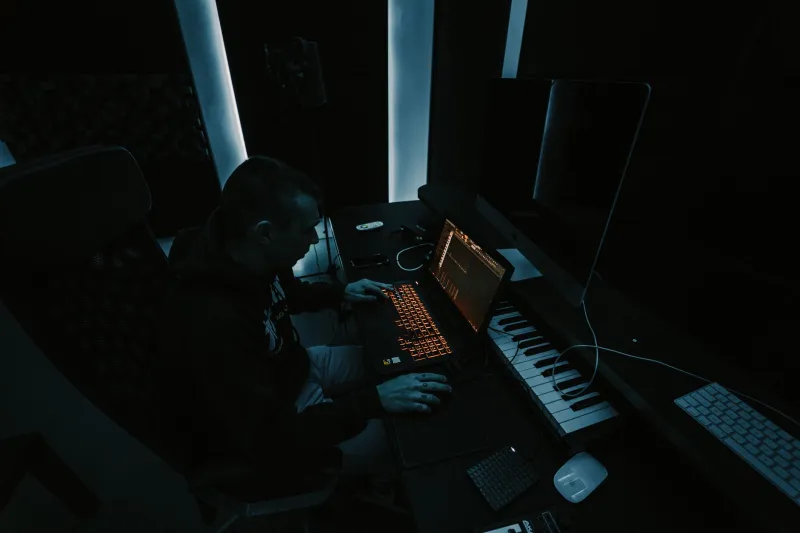
There's a graveyard living inside your hard drive. You know the one. A folder — maybe called 'WIPs' or 'Remixes_FINAL_v3_ACTUALFINAL' — packed with tracks that are almost ready. Drops that hit just right. Transitions that flow. Remixes that, honestly, would probably bang if anyone ever got to hear them. But they haven't. Because you needed to fix one more thing.
This is the remix perfectionism trap, and it's way more common than producers like to admit.
The 'One More Tweak' Spiral
It usually starts innocent enough. You finish a rough version of a flip, bounce it out, listen back, and catch something — a snare that's a touch too bright, a bass that's fighting the low end, a vocal chop that lands a millisecond late. So you fix it. Then you listen again. And you catch something else.
Before long, you've spent three weeks on a remix of a track that's been charting for six. The moment has half-passed. The original artist has moved on to their next single. And your version is still sitting in session limbo, technically brilliant, practically invisible.
This cycle has a name in psychology: it's called a completion avoidance loop, and it's not about perfectionism in the noble sense. It's about fear. Fear of putting something out and having it be wrong. Fear of releasing your best work and watching it flop anyway. Fear that the version in your head — the truly perfect one — will never actually exist in the real world, so you keep chasing it instead of shipping what you have.
When 'Not Done Yet' Is Actually 'I'm Scared'
Here's the uncomfortable question every producer needs to sit with: is the remix actually unfinished, or are you just afraid to commit to it?
There's a real difference. A remix that's genuinely unfinished has structural problems — the arrangement doesn't build properly, the mix is muddy, the energy doesn't translate on speakers beyond your studio monitors. Those are fixable, concrete issues with clear solutions.
But a remix you're 'just tweaking'? That's usually a remix that's done. The automation is clean. The mix translates. Your trusted producer friends have heard it and told you to drop it. Yet you keep opening the session anyway, nudging a filter sweep here, swapping a hi-hat pattern there, convincing yourself that the next change will finally make it right.
Spoiler: it won't. Because the issue was never the hi-hat.
The Obsolescence Clock Is Real
Here's what makes remix perfectionism especially brutal compared to original production: remixes have a shelf life that your original work simply doesn't.
When you flip a trending record, you're borrowing momentum from that song's cultural moment. That moment moves. A remix of a track that's hot in March might feel dated by May — not because the music changed, but because the conversation moved on. The TikTok sounds shifted. The DJ sets moved to the next thing. The algorithm stopped surfacing the original.
Every day your remix sits in draft mode, the window closes a little more. That doesn't mean you should release sloppy work — it means you need to be brutally honest about whether your 'improvements' are genuinely making the track better or just giving you an excuse to delay.
How to Actually Know When a Remix Is Done
A few practical tests that cut through the noise:
The Cold Listen Test. Close your session, step away for 48 hours, and come back fresh. Listen on headphones, then on a Bluetooth speaker, then in your car. If the track holds up across all three and you're not reaching for the mouse to fix something, it's done.
The Three-Friend Rule. Send the bounce to three producers whose ears you trust. Not for validation — for red flags. If all three independently mention the same issue, fix it. If they each mention something different, that's just taste, not a real problem.
The Timestamp Check. Look at when you last made a meaningful change to the session — not a tweak, an actual structural improvement. If it's been more than two weeks and the track sounds the same as it did then, you're not refining anymore. You're stalling.
The 'Would I Play This Out?' Test. If you had a set tonight, would you drop this remix? If yes, it's ready to release. If no, why not — and is that reason fixable in a day, or is it just nerves?
Breaking the Cycle Without Lowering Your Standards
The goal here isn't to start releasing half-baked work. It's to recalibrate what 'finished' actually means.
One approach that works for a lot of producers: set a hard deadline before you even open the session. Not 'I'll release when it's ready' — that's how you end up with a remix that's been 'almost ready' for eight months. Instead, give yourself a specific window. Two weeks from first drop to release. One week for mixing revisions. One weekend for final notes. When the clock hits zero, you ship it.
Another move is to separate your mixing sessions from your decision sessions. Do your technical work — EQ, compression, arrangement — in one session. Then close the project and come back purely to decide: does this track achieve what I wanted it to achieve? That's a yes or no question, not a 'let me just try one more thing' question.
You can also build in an accountability partner — another producer who's running the same release calendar you are. You share your deadline, they share theirs, and you hold each other to it. The social pressure alone is often enough to break the spiral.
Your Best Remix Is the One People Can Actually Hear
Here's the truth that's hard to internalize but easy to understand: a good remix that's out in the world does more for your career than a perfect remix that never leaves your hard drive.
The producers who build audiences, land licensing deals, and get noticed by artists aren't necessarily the ones with the most technically flawless work. They're the ones who show up consistently, release regularly, and let their body of work speak for itself over time.
Your remix graveyard isn't a collection of almost-masterpieces. It's a collection of opportunities you didn't take. The fix isn't to lower your standards — it's to stop letting the pursuit of perfect become the enemy of done.
Close the session. Bounce the file. Drop the track.
The mix is fine. It's always been fine.