No Label, No Problem: How Bedroom Producers Are Flipping Social Media Into Full-Blown Careers
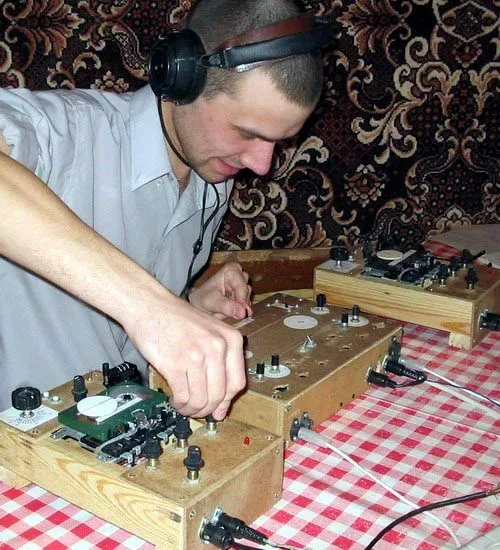
Photo: Marek Janota, CC BY-SA 4.0, via Wikimedia Commons
Forget the A&R guy with the business card. Forget the showcase at some mid-tier venue where you hand your demo to someone who loses it in a coat pocket. The music industry's old playbook is getting remixed in real time, and the people holding the faders are barely old enough to rent a car.
Gen Z producers — many of them working out of dorm rooms, childhood bedrooms, and converted closets — are rewriting what a music career looks like. Social media isn't just a marketing tool for these artists. It is the industry. And the remix, that gloriously democratic art form, is their weapon of choice.
The Algorithm Is the New A&R
Back in the day, getting your music heard meant knowing the right people. Now it means knowing the right trends. TikTok, Instagram Reels, and YouTube Shorts have essentially become the A&R departments that used to sit behind velvet ropes in New York and LA. When a 19-year-old producer in Atlanta or Des Moines posts a 30-second clip of a remix they cooked up overnight, and that clip racks up 800,000 views by morning — that's a career moment. No meeting required.
Take producers like Øneheart or Interworld, who built cult followings almost entirely through short-form video before most people in the traditional industry even knew their names. Their music — often dreamy, sample-flipped, emotionally loaded — connected directly with listeners who were already living their lives through the lens of a phone screen. The middleman got cut out entirely.
What's wild is that these artists aren't just getting streams. They're getting communities. Comment sections that feel like fan forums. DM threads where listeners share how a particular remix got them through something hard. That kind of connection used to take years to build through touring and radio play. Now it can happen in a weekend.
The Gear Gap Is Closing Fast
One of the biggest myths about music production is that you need a professional studio to make something worth hearing. That story is officially dead.
FL Studio, Ableton Live, and GarageBand have been democratizing production for years, but the shift has accelerated hard. Plugins that used to cost thousands of dollars are now available on subscription models or as free-tier downloads. Sample packs that once required industry connections to access are now a Google search away. Splice alone has changed the game — giving producers access to millions of royalty-free samples and loops for the price of a streaming subscription.
And then there's the hardware side. A solid MIDI controller, a pair of studio monitor headphones, and a decent audio interface can all be had for under $500 if you shop smart. That's the entire signal chain for a bedroom studio that's capable of producing release-ready tracks. The barrier to entry has never been lower, and Gen Z producers are exploiting that gap with everything they've got.
What's particularly interesting is how these producers are using limitations as creative fuel. Working with a small sample library or a single VST synth forces decisions that often lead to more distinctive sounds. Constraints breed identity. And in a crowded market, identity is everything.
Remix Culture as a Career Launchpad
Here's where things get really interesting from a CopyRemix perspective: the remix itself has become the ultimate calling card for independent producers.
Posting an unofficial remix of a trending song — whether it's a hyperpop flip of a pop hit or a deep house rework of something viral — puts your production chops on display in the most relatable context possible. Listeners already know the original. When your remix makes them feel something different about a track they've heard a hundred times, that's a demonstration of skill that no press kit can replicate.
Producers like Imanbek broke through exactly this way. His remix of SAINt JHN's "Roses" went from a SoundCloud upload to a Grammy-winning record. He was 18 years old and working out of Kazakhstan. The traditional music industry didn't discover him — the internet did, and the numbers were so undeniable that the industry eventually had to catch up.
This pattern is repeating itself constantly now. A producer posts a remix, it catches fire, labels come calling — but often, the producer already has enough leverage (thanks to their fanbase and streaming numbers) to negotiate on their own terms, or skip the label deal entirely in favor of independent distribution through platforms like DistroKid or TuneCore.
Building the Brand Beyond the Beat
Smart Gen Z producers understand that the music is only part of the equation. The person behind the music matters too. That means showing the process — posting studio sessions, breakdowns of how a remix came together, reactions to feedback. It means engaging with the community that forms around your sound.
This kind of transparency would have seemed bizarre to producers a generation ago. Studios were sacred spaces, and the magic was supposed to stay mysterious. But today's audiences don't just want the finished product — they want to feel like they're along for the ride. "Making a beat in 60 seconds" videos regularly outperform polished music videos because people are hungry to understand how the sausage gets made.
For producers willing to show up consistently and authentically online, the rewards compound over time. Every remix that lands, every viral moment, every collaborative project adds another layer to a reputation that no label contract can manufacture.
The New Industry Runs on Collaboration
One more thing worth noting: these independent producers aren't working in isolation. Discord servers, Reddit communities, Twitter (or X, whatever we're calling it) threads — these are the new A&R meetings, the new studio sessions. Producers are trading stems, sharing feedback, co-producing across state lines and time zones.
The remix ecosystem thrives on this kind of collaboration. One producer's sample flip inspires another's arrangement idea. A vocal chop technique gets passed around a Discord server and shows up in ten different tracks within a month. This is how production culture evolves — not from the top down, but from the ground up, one bedroom at a time.
The gatekeepers didn't disappear. They just became irrelevant.
And for a generation that grew up remixing everything — memes, sounds, aesthetics, identities — that's not a disruption. That's just how it was always supposed to work.