Five Remixes That Rewired Electronic Music: A Producer's Breakdown of the Classics
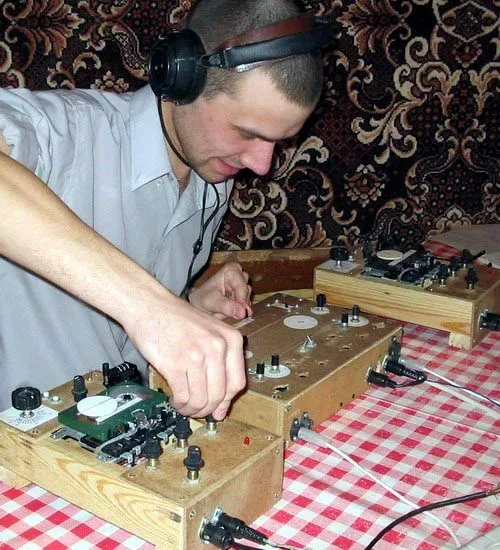
Photo: jf 1234, CC BY-SA 2.0, via Wikimedia Commons
Every producer has that moment. You hear a track, and something in your brain short-circuits — not because it's good, but because it's different in a way you can't immediately explain. You listen again. And again. You start pulling it apart in your head, trying to figure out what decisions were made, what was chopped, what was added, what was stripped away to make something feel that inevitable.
That's what great remixes do. They don't just rework a song — they reveal a new architecture hiding inside it. Below, we're going deep on five remixes that didn't just top charts or fill dancefloors. They changed how producers think.
1. Daft Punk – "One More Time" (Daft Punk's Own Vision)
Okay, technically this is a Daft Punk original, but the production approach is so deeply rooted in remix methodology that it earns its place here. Thomas Bangalter and Guy-Manuel de Homem-Christo built "One More Time" around a heavily processed vocal sample from Eddie Johns' "More Spell on You" — a piece of deep funk soul that most listeners in 2001 had never heard.
The key move? Vocoder-heavy pitch manipulation that turned a human voice into something that sounded alien and intimate at the same time. The chord progression underneath is deceptively simple — four chords cycling in a loop — but the arrangement is where the genius lives. The track breathes. It drops elements out, strips back to almost nothing, then rebuilds. That tension-and-release structure became a template that house and EDM producers have been borrowing ever since.
For bedroom producers, the lesson from "One More Time" is about restraint. More isn't always more. Letting a groove breathe, holding back the drop, trusting the listener — these are production decisions that require confidence. Daft Punk had it in abundance.
2. Basement Jaxx – "Where's Your Head At" (Basement Jaxx's Original with Sample DNA)
Another track that lives in the remix spirit: the main riff of "Where's Your Head At" samples Gary Numan's "M.E.," and what Basement Jaxx did with that sample is a case study in transformation. They took a cold, almost clinical synth line from late-70s post-punk and injected it with the frenetic energy of early 2000s electro-breaks.
The production is dense and chaotic in a very deliberate way. Multiple percussion layers, stuttered vocal chops, synth stabs that feel slightly off-kilter — it's the sonic equivalent of a funhouse mirror. Nothing sits in a comfortable place, which makes it impossible to tune out.
For producers working with samples today, the Basement Jaxx approach is instructive: don't just lift a sample, mutate it. Pitch it, chop it, layer it against something unexpected. The goal isn't to honor the source material — it's to use it as raw clay for something entirely new.
3. Disclosure – "You & Me" (Flume Remix)
If there's one remix that defined the early 2010s for a generation of producers, it's Flume's rework of Disclosure's "You & Me." The original is already excellent — warm, soulful UK garage with Eliza Doolittle's vocals riding a shuffling rhythm. But Flume, then a teenager in Australia, took it somewhere else entirely.
The Flume remix introduced American audiences to a production aesthetic that felt genuinely new: chopped, pitched-down vocal chops used as melodic instruments; a bass that moved like liquid; a sense of space that made every element feel carefully placed rather than stacked. The drop hits like a revelation — not because it's loud, but because it's precise.
What makes this remix a masterclass is the vocal treatment. Flume didn't just use Doolittle's voice as a topline — he deconstructed it, turning syllables into percussion and phrases into melodic hooks. That technique, now commonplace, felt genuinely revelatory when this remix landed on SoundCloud in 2012. It's a reminder that the best remix decisions often involve hearing what's already in a track and simply letting it become something else.
4. Skrillex – "Cinema" (Skrillex Remix of Benny Benassi)
Love him or hate him, Skrillex's remix of Benny Benassi's "Cinema" is impossible to ignore from a production standpoint. The original is a mid-tempo electro house track with a hypnotic quality. Skrillex's version is a sonic assault — and that's the point.
The remix introduced mainstream audiences to a level of sound design aggression that had previously been confined to underground dubstep circles. The wobble bass — constructed through heavy sidechain compression and LFO-modulated filtering — became one of the most imitated sounds of the decade. The arrangement is almost confrontational: long build, sudden drop, maximum impact.
But here's what often gets lost in the conversation about Skrillex's polarizing reputation: the sound design work is genuinely sophisticated. Those bass growls aren't random — they're tuned and sequenced with real musicality. The high-frequency elements are layered to create texture without muddiness. This is a producer who understood frequency management at a level that most of his imitators didn't, which is why so many of those imitations sounded like noise while the original still sounds like something.
For producers, the Skrillex "Cinema" remix teaches a lesson about commitment. Halfway is the worst place to be. If you're going aggressive, go all the way. The remix works because it's fully committed to its own logic.
5. Mark Ronson – "Uptown Funk" (Production as Remix Philosophy)
Mark Ronson has said in interviews that his entire production approach is essentially remix thinking — taking the DNA of past eras and recontextualizing it for the present. "Uptown Funk" is the purest expression of that philosophy at scale.
The track is a meticulous reconstruction of early 80s funk — gap band, Morris Day, Minnesota — filtered through a modern production sensibility. The brass arrangements are live but mixed to sit like samples. The bass is played but processed to punch like a drum machine. The whole thing feels vintage without ever being a direct copy of anything.
For producers who work in sample-based music, Ronson's approach offers a different kind of lesson: you don't always need to sample. Sometimes the most effective remix is the one where you rebuild the vibe from scratch, with live elements, until it sounds like a memory of something that never quite existed. That's a high-wire act, and "Uptown Funk" pulls it off.
The Through Line
Look across all five of these tracks and a few themes emerge. Restraint matters. Commitment matters. The treatment of existing material — whether it's a sample, a vocal, or a stylistic reference — is where the real creative work happens. And in every case, the producer made a choice that could have failed spectacularly but didn't.
That's the remix mindset at its best: fearless transformation in service of something that hits harder than the original. It's what separates a rework from a reimagining. And it's what keeps producers coming back to study these tracks, years and decades after they first dropped.
The blueprint is right there in the music. You just have to listen closely enough to hear it.